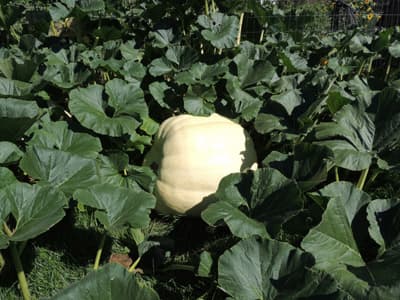
Shortly after successful pollination, the female flower at the end of the tiny baby pumpkin fruit will die off. Soon, the tiny pumpkin begins to visibly grow. This becomes apparent after just a few days. Your pumpkin’s growth will seem slow at first. Within days, you will visibly see it begin a fast, stellar growth towards the record size you are planning for it.
Importantly, the proper positioning of the pumpkin and stem to the main vine helps to maximize growth. Also, fewer pumpkins on the plant helps to maximize size and weight.
Many people ask me about placing the fruit in an upright position to help it grow more round and smooth on all sides. Placing the fruit upright may accomplish this. However, if you do this too early, the fruit may take on a squatty shape, especially larger pumpkin varieties. If you choose to do so later in the fruit’s growth, you will likely disturb the secondary roots. More importantly, you risk damaging the main vine. This is no small risk. And often it does more harm than good. Whether you are growing “the big one” or a regular jack-o-lantern size fruit, I recommend you leave it alone as much as possible.
First of all, it is important to position giant pumpkins properly on the vine to keep them from stressing and pulling off the vine as it grows. This is an important, yet fairly easy step for growing giant pumpkins. Failure to properly position them on the vine can cause stem stress, kinks, or even tears on the vine or stem. The flow of water and nutrients is restricted. And, in the worst cases, it causes the stem to split from the vine. Vines are your umbilical cord. You must treat them with great care. A small kink or tear may not prove disastrous. But, it reduces the potential size of your fruit.
For giant pumpkins, plan how to position the fruit in advance. The vine near the fruit should be “loose”. Also, allow the vine to move upward as the fruit grows. Without a little human intervention, stress problems will occur, as your giant pumpkin approaches two to three hundred pounds.
In the selection process, a pumpkin fruit with a stem perpendicular to the vine is preferred. This allows the pumpkin to grow away from the vine and not onto the vine as it grows. I like to turn the vine away from the fruit in an “L” or “U” shape. The perfect position is where the stem looks like it is growing in a straight line from the main vine and new vine growth beyond the fruit, takes a right or left turn. Next, after a few more feet of growth, you can turn it back in the direction it was headed, if you prefer. If the position of the fruit is not perfect, move it ever so slowly into the ideal position. Move it into position, just a little bit a day, over several days. Importantly, if you move it too quickly, you can damage the vine or stem.
General wisdom suggests that no secondary roots are allowed to grow two to three feet from either side of the fruit. If the vine is rooted, it can tear the vine or stem as the pumpkin grows and puts stress on the vine, as it pulls the vine upward.
IMPORTANTLY, if a vine tear develops at any point, there is little you can do. I know of no one who is successfully performing skin grafts on pumpkin vines. If a vine tear occurs after the fruit, cover it with soil. Then, it should produce secondary roots.
A single pumpkin plant normally produces two to five pumpkins. Miniature varieties will produce up to a dozen or so. There will usually be several more female fruit, but a some of them will not develop for a number of reasons.
Giant pumpkin growers – If you are growing the pumpkin for size and weight (giant pumpkins), you should eventually select one pumpkin and remove the rest from the vine. This allows the plant to direct all of it’s resources to growing one fruit. A small number of growers keep a second fruit on the vine for a short period of time, as an “insurance policy” in case disaster strikes the first fruit. If you only have one or two vines, you may prefer to keep a second fruit on the vine for a longer period of time.
This does not preclude the possibility that you can grow enormous pumpkins, if you keep more than one on the vine. Just keep in mind that the plant is splitting it’s energy to producing multiple fruit.
If you are growing competitively for size and weight, selecting one pumpkin per plant is a must. You must also consider the risk that disaster could befall this one fruit. The defensive move, is to keep two fruit on the vine, and sacrifice some potential size. You can still produce showcase fruit.
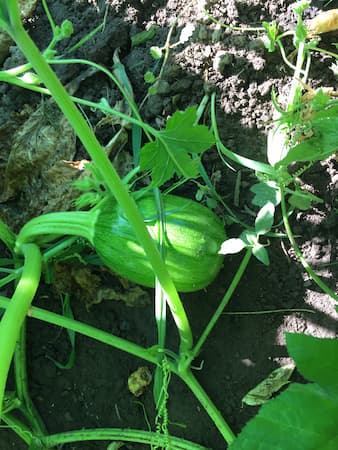
If you are growing pumpkins for size, you will ultimately be faced with the decision of which pumpkin to keep on the vine. Assuming you have two or three pumpkins growing and you only want to keep one, here are some helpful decision making criteria to use:
If the decision is between beauty or beast………. I wish you luck deciding.
Also, people who like this article on the proper positioning of pumpkin fruit on the vines will like: