Pumpkin Nook

The Internet Shrine and Library for Pumpkins

Home

Channels:
Market
How to Grow
Giant Pumpkins
Community
Fun and Games
Facts/Education
Cookbook
Halloween
Thanksgiving
Kid Stuff
Search Site

Other:
Readers Say:

Free Newsletter
Advertise
Gardener's Net
HI Greeting Cards

* * * * * * *

Shop Us for:

Gardening:
Annual Seeds
Perennials Seeds
Vegetable Seeds
Herb Seeds
Organic Seed/Supply

Flower Bulbs
Composters
Greenhouses
Houseplants
Planters
Raised Beds
Supplies

Yard & Deck:
Grills
Hammocks
Hose Carts/Reels
Outdoor Fireplace
Outdoor Storage
Statues/Elves
Pest Control

Seasonal:
Halloween
Thanksgiving
Christmas
Other Holidays
Carving Stuff
Fog Machine
Jello Molds
Lights
House Flags
Candles
Decorations
Kitchen/Party Supply

TGN OnLine Florist


Amazon.com
Search for:
Pumpkins

or
Gardening


 Pumpkin Seeds - Buying, Selection and Saving


Seed Selection:

Any experienced grower will tell you that good seed is an important to a successful crop. What the statement means is:

  1. The seeds are viable and a good germination rate(percentage) is likely to exist.
  2. Genetics, genetics, genetics. If you want a large pumpkin, obtain seeds from a large parent. However, not all large pumpkins are "pretty". So you may have to sacrifice a little size for a rounder, oranger strain.
  3. Many growers, including this author, believe that viruses can be stored in the seeds and carry into the next year's crop. So, you want to obtain seed from a grower who rotates his crops and knows to remove any diseased vegetation from his garden.
  4. The seeds will produce the type of fruit you want. Cross-pollination is common among the Cucurbita Family. Any experienced grower has experienced a cross between a pumpkin and a zucchini at least once. The problem is that when cross-pollination occurs, the genetics are contained in the seed, and will not show up until next year. Experienced growers know how to minimize this.

When you look to acquire seed, keep the above thoughts in mind. But, do not let it deter you from either saving your own seed, or getting seed from another grower. I have not bought pumpkin seeds in decades, and have had few problems.


Saving Seeds:

Here are the simple steps for saving your seeds for next year:

  1. Select large, healthy pumpkins from healthy plants. Remember large begets large and round begets round.

  2. If one plant appears more disease resistant than others, lean towards a pumpkin from this vine.

  3. Select two or three pumpkins if possible. Multiple sources increases the likelihood of good germination.

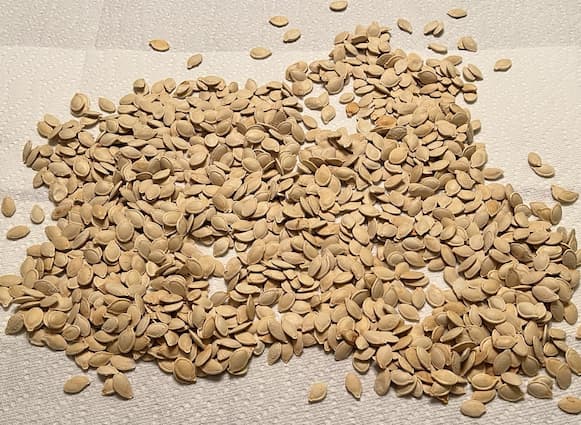
  4. Extract the seeds from the pumpkins.

  5. Wash and rinse seeds thoroughly, using soapy, lukewarm water. Do not use hot water, and do not allow the seeds to soak in the water.

  6. Drain seeds in a strainer.

  7. Spread seed out an screen.

  8. Stir the seeds often the first two days. Turn them over as you stir.

  9. Allow the seeds to air dry in a cool, dry area for three weeks. Longer is recommended. Do not cut the time short, even if the seeds appear "dry".

  10. Store seeds in a bag, envelope or jar in a cool dry place. Use of an air tight jar is not recommended, because if the seeds have not thoroughly dried, they will mold and rot.

  11. Mark the seeds with date and type of pumpkin.

  12. Some people place the seed in a freezer for a couple of weeks before sowing them to replicate nature if at all possible. This is optional and I have seen no difference.


Home | Shop | Site Search | How to Grow | Giant Pumpkins |Fun 'N Games | Facts 'n Education |
| Cookbook | Halloween | Thanksgiving | Community | Other Links | Advertise | Contact Us |

Copyright 1998-2007 PumpkinNook © By Premier Star Co.