
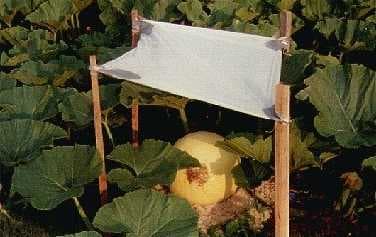
Pumpkin weather protection is an important issue. This is especially true for giant pumpkin growers over a very long growing period. You don’t want disaster to strike, if you can avoid it.
While pumpkins are easy to grow, they are susceptible to the occasional extremes of Mother Nature. In addition, while they can be grown in most of the U.S., some areas require extra care and protection from nature.
Sun protection is a vital part of your plant and fruit protection program. The further south you live, the more important it is. Growers in the Southern parts of the U.S. could not grow pumpkins in their hot summer environments, without providing sun shade to the leaves. Even in northern areas, pumpkin leaves wilt in temperatures in the mid 80s or higher. While sun shades may not be a necessity, overhead sprinklers in mid-afternoon heat, can help to cool and revive wilted leaves.
The fruit of a giant pumpkin begins as a soft yellow fruit, similar to it’s cousin, a yellow summer squash. The skin is soft and almost moist. Because of these characteristics, it can expand rapidly as the fruit grows, rather than act as a limiter to growth. Without a doubt, the fruit should be shaded from the sun to help the skin to maintain it’s soft, pliant texture as long as possible. In addition, a shade cover slows the maturation process, allowing the fruit to grow bigger. Construct a sun shade, and make sure it is helping your fruit, not harming it.
Before describing some shade cover methods, here’s some of this authors’ early errors(it’s funny now):
Year one: I was just learning about growing. Being a creature of higher intelligence, I laid a piece of screen on top of the fruit. My theory was the mesh would let through cool air and the screen would offer some shade. Quick, easy, intelligent and cheap. The top of the fruit cooked and hardened, as the screen conducted heat.
Year two: Bound and determined to keep every bit of sun from the fruit, I put four stakes in ground and used duct tape to hang a black plastic sheet a several inches over the young fruit. Quick, easy, cheap and much more intelligent. Result: The top of the fruit cooked as soon as it reached a couple of inches from the black plastic.
Year 3: Same as year two, but I used white plastic to reflect most of the sun’s rays. The result: successful cover for most of the fruit. But, around the edges, it turned to orange a little earlier than I had hoped. No real harm, but still not perfect.
The conclusion from this is:
There are several ways to provide pumpkin weather protection. Here are a few of them:
Note: This design is good to about five to six hundred pounds. If you anticipate a bigger pumpkin, plan about a foot higher, wider and longer.
Pumpkins among the most tender of annuals. They do not like cold weather. Pumpkins will die from frost. As the temperature drops below fifty into the forties then thirties, they will slow down, stunt, and cease growing and producing fruit.
Protect your plants from spring and fall frosts. A cold frame or covering is important in the spring. In the fall, if they are still growing, you can get additional days of growth if your cover them with plastic or floating row covers during cold nights.
Giant pumpkins leaves are…..BIG!! The leaves often surpasses 20 by 20 inches. Leaves of this size on thin stems are susceptible to wind damage, especially if the plant is in an open field, or on a hill. In an afternoon thunderstorm, leaves can be damaged or break, reducing the food production to the fruit.
Many growers provide wind protection for their plants. The easiest and most common approach is to erect a snow fence along the western side of the patch at a minimum. You may opt to fence the northern side or even the whole garden if you choose. Make sure to place the fence close enough to afford protection, but not so close as to shade the plant for prolonged periods of the day.
If your area is susceptible to damaging hail storms, a hail screen is recommended. This is particularly true in the mid-west and south, where hailstorms are more common, and the size of the hail is large (golf ball to baseball in size). Some areas of the country see few hailstorms, and when they do occur, the hail is only pea sized or smaller. In these areas, it is probably and acceptable risk, and hail screens are not used.
Finally, pumpkin plants benefit from protection from high temperatures.
I never thought much about the damage heat could cause to pumpkin leaves and vines until a grower from Colorado Springs told me about his problems dealing with 100 degree heat. He claimed he was from “Pumpkin Death Valley”, yet he successfully grows pumpkins.
This Colorado pumpkin grower purchased and installed a shade cover for his entire backyard garden. The purpose of the cover in this area, is literally for plant survival. As temperatures soar, pumpkin vines and leaves are burned by a combination of heat and sun. The shade cover cools the temperature around the plant, and protects it from the sun during the hottest periods of the day. Without it, pumpkins (and many other plants) could not be grown in this environment.
If you are located in southern areas of the country and have a strong desire to grow pumpkins, give this method a try one season. Your extra efforts may produce fruit!
People who like this article on pumpkin weather protection will also like:
Number of Pumpkins to Keep– Importantly, choose either more or bigger fruit.